The Impact of Strategic Sight Lines on Home Design and Comfort
The Impact of Strategic Sight Lines on Home Design and Comfort
Understanding Sight Lines in Modern Home Design
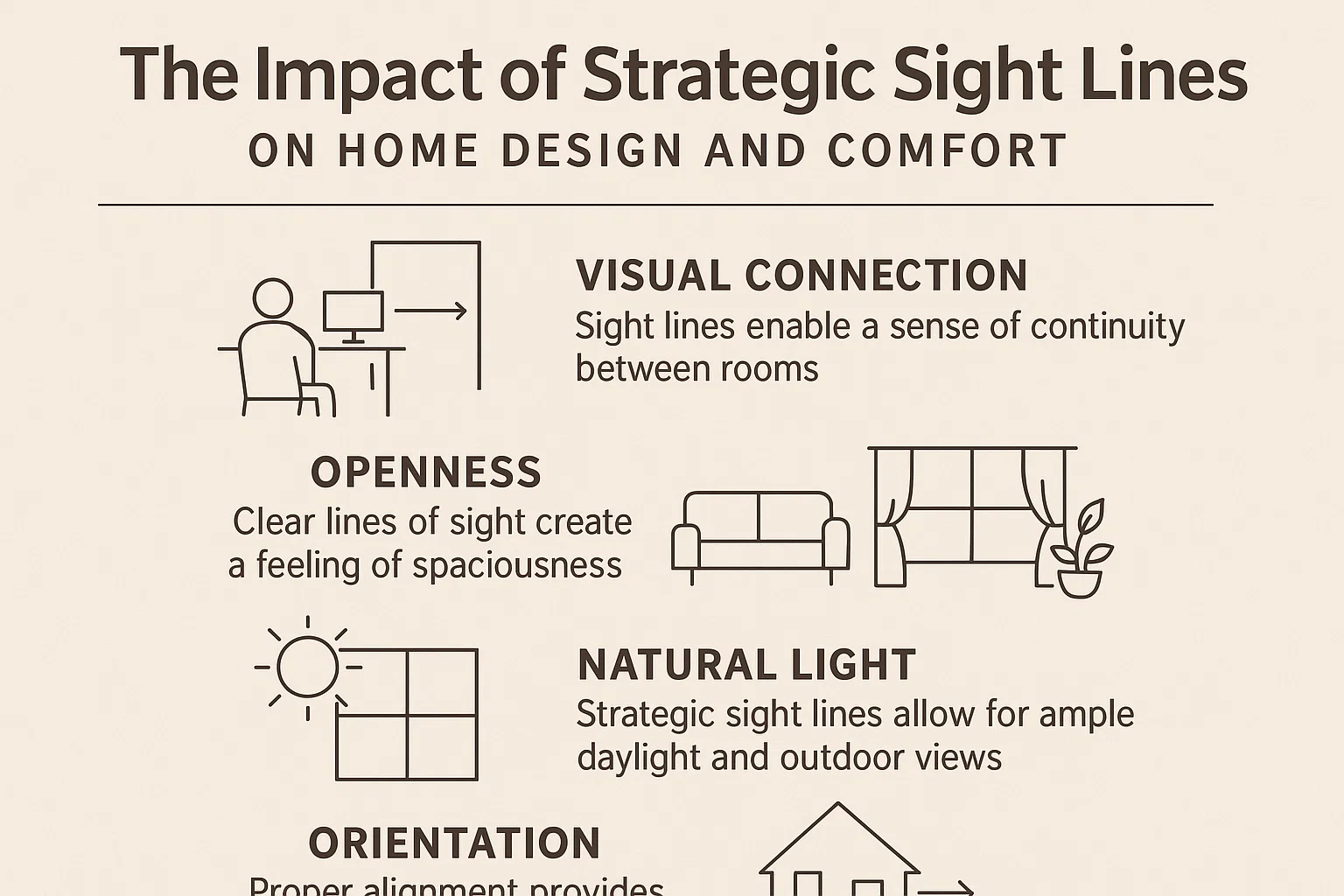
Sight lines play a pivotal role in shaping the perceived size and functionality of a home. Whether designing a spacious estate or a compact cottage, intentional sight line placement enhances livability by creating seamless visual connections between spaces. These lines represent the unobstructed views between two points within a home, influencing both aesthetics and practicality.
Why Sight Line Planning Matters
Every home inherently contains sight lines, but their strategic implementation separates exceptional designs from ordinary layouts. Well-executed sight lines:
- Maximize natural light distribution
- Create an illusion of expanded space
- Improve spatial awareness and connectivity
However, balance is crucial. While open sight lines promote airiness, certain areas require closed sight lines to ensure privacy and functionality. Bathrooms, media rooms, and private suites often benefit from visual separation to maintain comfort and usability.
Strategic Implementation in Modern Construction
Forward-thinking builders incorporate sight line optimization through:
- Entryway designs that gradually reveal interior spaces
- Strategic kitchen placements connecting to dining and living areas
- Intelligent privacy zoning for guest suites
This approach ensures residents maintain visual connectivity in shared spaces while preserving secluded areas for privacy. The result is a harmonious living environment where natural light enhances daily activities without compromising comfort.
Optimizing Daily Living Through Design
Effective sight line planning directly impacts residential experiences:
- Parents can supervise children while preparing meals
- Entertaining flows naturally between conversation areas
- Architectural features become focal points
By analyzing movement patterns and visual connections during the design phase, modern homes achieve both aesthetic appeal and practical functionality. This methodology transforms standard floor plans into dynamic living spaces that adapt to residents’ evolving needs.