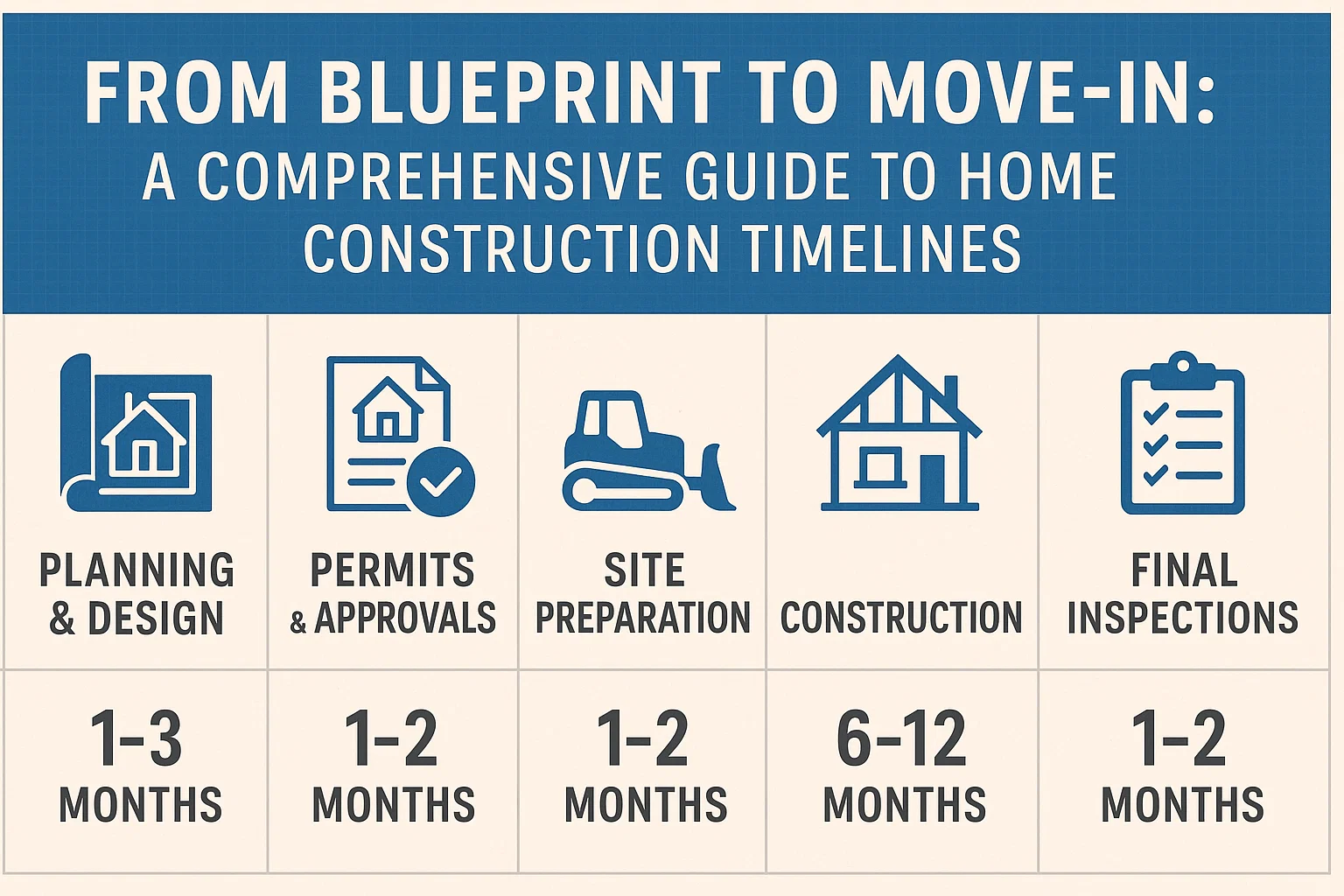
From Blueprint to Move-In: A Comprehensive Guide to Home Construction Timelines
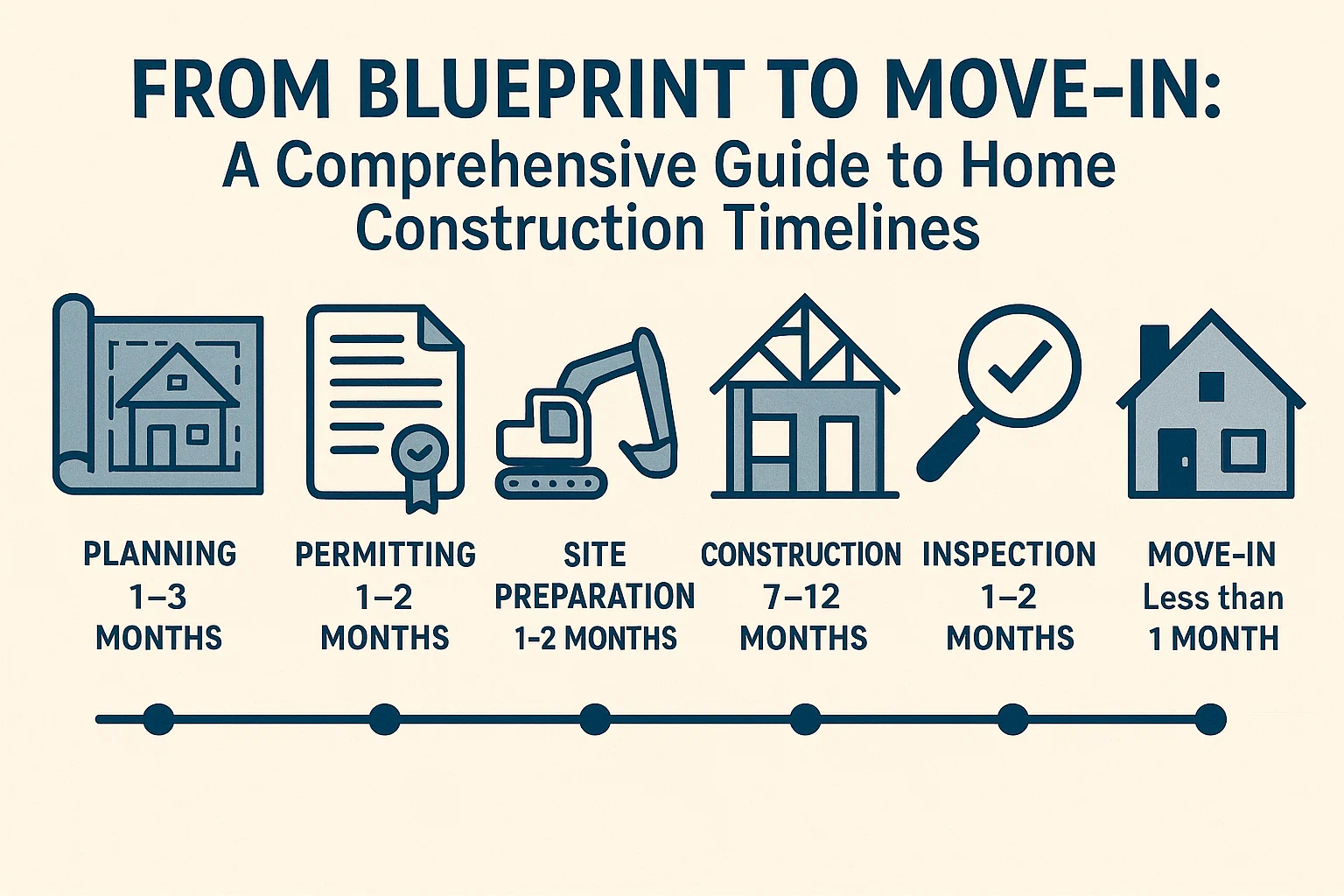
From Blueprint to Move-In: A Comprehensive Guide to Home Construction Timelines
If you’re planning to build a home from the ground up, understanding the timeline is crucial. While the average construction period for a single-family home in the U.S. ranges from 4 to 6 months, several factors can influence this timeline. Regional differences, home size, and preparation steps all play a role in how quickly your project reaches completion.
Key Factors Influencing Construction Timelines
- Regional Climate: Homes in the Northeast often take 7–9 months due to harsher weather, while Southern and Western regions average 4–6 months.
- Home Size: Larger homes with complex designs require more time, while smaller, simpler layouts can be completed faster.
- Builder Experience: Established builders minimize delays and ensure quality.
- Material Availability: Finalizing design choices early prevents supply-chain bottlenecks.
- Seasonal Workforce: High demand for subcontractors during peak seasons may extend timelines.
Phases of Home Construction
1. Pre-Construction Phase (1–2 Months)
- Permit Acquisition: Builders secure local permits to comply with safety and zoning codes. Timelines vary by municipality.
- Design Selections: Choose finishes, fixtures, and appliances early to avoid installation delays.
- Financing: Secure loan pre-approval to streamline the process.
2. Construction Phase (4–6 Months)
- Site Preparation: Land clearing, utility installation, and foundation pouring (slab, basement, or crawl space).
- Framing & Roofing: Structural framing, window installation, and exterior finishes like siding.
- Systems Installation: Plumbing, electrical wiring, and HVAC ductwork.
- Insulation & Drywall: Insulation applied to walls and attics, followed by drywall installation.
- Interior/Exterior Finishes: Cabinets, countertops, flooring, doors, and exterior hardscaping.
- Fixtures & Flooring: Final installation of lighting, faucets, and carpeting/hardwood.
3. Final Steps
- Inspections: A local official issues a certificate of occupancy after a successful final inspection.
- Walkthrough: Identify last-minute repairs (e.g., paint touch-ups, fixture adjustments) before moving in.
By staying proactive during each phase—selecting materials early, securing financing, and collaborating with experienced professionals—you can ensure a smoother path to your dream home. With careful planning, you’ll be ready to move in and enjoy your new space on schedule!